
Maintaining a comfortable home in Colorado requires an HVAC system that can handle both cold winters and warm summers. Choosing the right equipment can affect your comfort, energy use, maintenance needs, and long-term household expenses.
For homeowners searching for heating cooling services in Englewood Colorado, one of the most important decisions is selecting the right heating system. The comparison between a heat pump and a furnace is especially important for homeowners planning an HVAC replacement or new installation.
If you have been researching Heat pump vs furnace Denver, understanding how both systems work can help you have a more productive conversation with an HVAC professional.
Why HVAC Selection Matters in Colorado
Colorado weather can change considerably throughout the year. Heating equipment may be required during cold winter conditions, while air conditioning becomes important during the warmer months.
An HVAC system that is correctly selected and professionally installed can provide more consistent indoor temperatures. It can also help reduce unnecessary strain on equipment.
Professional heating cooling services in Englewood Colorado can cover everything from routine maintenance to complete system replacement.
Common services include:
- Heating system installation
- Furnace repair
- Heat pump service
- Air conditioner installation
- AC repair
- HVAC maintenance
- Thermostat service
- Ductwork inspection
- Indoor airflow evaluation
- HVAC system replacement
Heat Pump vs Furnace Denver: How Do They Work?
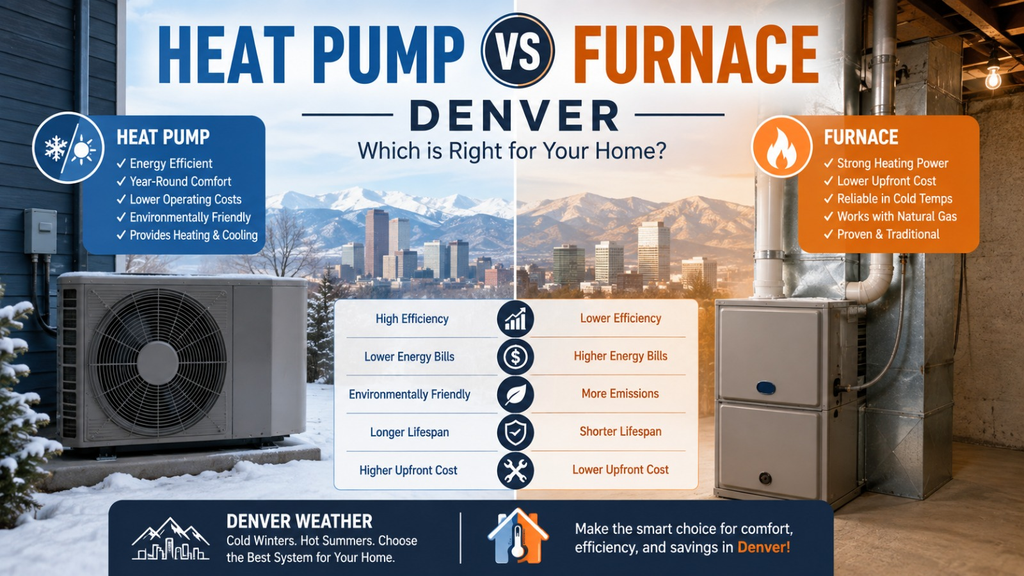
The main difference between a heat pump and a furnace is the way heat is supplied to your home.
A furnace creates heat and then distributes that heat through the home’s ductwork. Depending on the equipment, a furnace may use natural gas, propane, or electricity.
A heat pump transfers heat instead of producing it directly. During the heating season, it moves available heat from outside into the home. During warmer weather, it reverses the process and works as an air conditioner.
This means one heat pump can provide both heating and cooling.
Benefits of a Heat Pump
Heat pumps can be an appealing option for homeowners interested in modern HVAC technology.
Heating and Cooling Together
One of the biggest advantages is that a heat pump can provide both heating and cooling. This eliminates the need for separate heating and cooling equipment in many applications.
Efficient Operation
Heat pumps transfer heat rather than creating it through combustion. Under suitable operating conditions, this can make them an efficient option for home heating.
Electric Heating Option
Many heat pumps operate using electricity, making them an option for homeowners who prefer an all-electric HVAC setup.
Convenient Temperature Control
Because the same system can handle both heating and cooling, homeowners can use one primary system and thermostat throughout the year.
Benefits of a Furnace
Furnaces have remained a common heating solution because of their ability to deliver substantial amounts of heat.
A modern furnace can provide reliable heating when it is properly sized, installed, and maintained.
Powerful Heating
Furnaces are designed specifically for heating and can provide strong warm-air output.
Familiar Technology
Many homes already have furnace-based heating systems, making replacement with another furnace relatively straightforward.
Different Efficiency Options
Today’s furnaces are available in multiple efficiency levels, allowing homeowners to select equipment according to their heating needs and budget.
Fast Warm-Air Delivery
A furnace produces heat directly, which allows it to deliver warm air through the home’s duct system during a heating cycle.
Heat Pump vs Furnace Denver: Energy Considerations
Energy consumption is an important consideration when comparing Heat pump vs furnace Denver.
A heat pump’s energy performance can vary based on outdoor temperature, system efficiency, home insulation, equipment sizing, and installation quality.
A high-efficiency furnace can also perform effectively and may be particularly attractive in homes that already have natural gas infrastructure.
Instead of choosing a system based solely on general efficiency claims, homeowners should consider the expected performance of specific equipment in their home.
An HVAC professional can evaluate your property and explain how different systems may perform under local conditions.
Should You Replace Your Existing Furnace With a Heat Pump?
Replacing a furnace with a heat pump is not automatically the best decision for every home.
Before making the change, consider:
- Existing ductwork
- Electrical capacity
- Home insulation
- Current heating requirements
- Cooling requirements
- Available equipment
- Installation costs
- Expected operating expenses
A professional HVAC assessment can determine whether the existing infrastructure is suitable for a heat pump.
In some cases, homeowners may also consider a dual-fuel system that combines a heat pump with a furnace.
What Is a Dual-Fuel HVAC System?
A dual-fuel system combines two heating technologies.
The heat pump can handle heating when conditions are favorable, while a furnace can provide additional heating when outdoor temperatures or other operating conditions make it appropriate.
This approach may offer homeowners greater flexibility.
Whether a dual-fuel system makes sense depends on the property, equipment availability, energy costs, and homeowner preferences.
Signs You May Need HVAC Replacement
Sometimes the best time to compare heating technologies is when an existing HVAC system is already nearing the end of its useful life.
Watch for signs such as:
- Frequent repair calls
- Increasing utility costs
- Uneven temperatures
- Poor airflow
- Repeated system breakdowns
- Unusual operating noises
- Aging equipment
- Expensive replacement parts
- Declining heating or cooling performance
If you are experiencing several of these issues, ask an HVAC professional whether repair or replacement makes more financial sense.
Why Professional Installation Is Important
Even a high-quality HVAC system may not perform as expected if it is installed incorrectly.
Proper installation involves more than simply connecting equipment. The system needs to be appropriately sized and configured for the property.
Professionals providing heating cooling services in Englewood Colorado can inspect the home and determine the appropriate system capacity.
They may evaluate:
- Home size
- Insulation
- Windows and doors
- Ductwork
- Airflow
- Existing equipment
- Electrical requirements
- Heating and cooling preferences
Correct installation can help improve comfort and reduce unnecessary equipment stress.
HVAC Maintenance for Heat Pumps and Furnaces
Routine maintenance is important regardless of which heating system you choose.
Furnace maintenance may include checking the burner assembly, blower, electrical components, filters, and safety controls.
Heat pump maintenance can include checking coils, airflow, electrical connections, outdoor components, and heating and cooling performance.
Regular inspections can help identify potential problems before they become major repairs.
Homeowners should also pay attention to their air filters. A dirty filter can restrict airflow and make an HVAC system work harder.
How Heating Cooling Services in Englewood Colorado Can Help
Professional HVAC service can make it easier to keep your home comfortable in every season.
If your system stops working, an experienced technician can diagnose the problem and explain available repair options. If your equipment is approaching the end of its service life, the technician can also discuss replacement choices.
Reliable heating cooling services in Englewood Colorado may include emergency repairs, scheduled maintenance, seasonal inspections, and new HVAC installations.
Having one trusted HVAC provider can make routine maintenance and future system upgrades easier to manage.
Questions to Ask Before Buying a New HVAC System
Before investing in new equipment, ask your HVAC contractor several important questions.
Is my existing system repairable?
A relatively inexpensive repair may be more practical than replacement.
What system size does my home require?
Proper sizing is essential for efficient and comfortable operation.
Would a heat pump work well in my home?
The answer depends on your home’s construction, existing infrastructure, and heating requirements.
Would a furnace be a better option?
A professional can compare available furnace options with heat pumps.
What maintenance will the system require?
Understanding maintenance requirements can help you plan for long-term ownership.
Making the Right HVAC Decision
The best HVAC system is not necessarily the newest or most expensive model. It is the system that fits your home’s requirements and your long-term priorities.
When comparing Heat pump vs furnace Denver, consider heating performance, cooling capability, efficiency, installation requirements, maintenance, and expected operating costs.
A heat pump can provide both heating and cooling and may be an excellent option for many homeowners. A furnace can provide dependable, powerful heating and may be a practical choice for homes already designed around furnace technology.
For some homeowners, a combination system may also be worth considering.
Final Thoughts
Choosing a heating and cooling system is an important decision for any Colorado homeowner. The right equipment can improve comfort while helping you manage maintenance and energy expenses over time.
If you need heating cooling services in Englewood Colorado, start by having your existing system professionally evaluated. A qualified HVAC professional can help identify problems, determine whether replacement is necessary, and compare different equipment options.
And if you’re specifically researching Heat pump vs furnace Denver, don’t make your decision based on price alone. Consider how each system will work with your home, how much heating and cooling it provides, and what type of maintenance it will require.
With proper planning, professional installation, and regular maintenance, you can choose an HVAC solution that keeps your home comfortable through Colorado’s changing seasons.