
1. Understanding the Characteristics of HPMC in Concrete and Mortar
1.1 Major Advantages of HPMC as a Multifunctional Additive
Hydroxypropyl Methylcellulose (HPMC) has become a widely used additive in cement-based materials because it can simultaneously improve water retention, rheology, workability, and resistance to segregation. Its multifunctional characteristics make it particularly valuable in mortar and specialized concrete formulations.
1.1.1 Superior Water-Retention Capability
One of the most important functions of HPMC is its ability to retain water.
Cement hydration requires an adequate supply of moisture. However, when mortar is applied to highly absorbent substrates such as masonry, water can rapidly migrate from the mixture into the substrate through capillary absorption. If sufficient water is not retained, cement hydration may become incomplete, potentially resulting in poor adhesion, surface defects, shrinkage, and cracking.
After HPMC dissolves in water, it can form a protective colloidal structure around cement particles. This structure helps create a barrier that slows both evaporation and the migration of water into porous substrates. As a result, more water remains available for cement hydration, improving the consistency and performance of the fresh mixture.
1.1.2 Effective Rheology and Workability Control
HPMC is also an effective thickening and rheology-modifying agent. Even relatively small quantities can increase the viscosity of cementitious mixtures and produce a smoother, more cohesive consistency.
This characteristic is especially beneficial during construction. HPMC can reduce friction between particles and improve the handling characteristics of mortar. It also contributes to anti-sagging behavior.
For example, when tile adhesive is applied to a vertical surface, the rheological structure developed by HPMC can provide sufficient yield stress to help keep the material in position rather than allowing the tile to slide downward under gravity.
1.1.3 Thermal Gelation Characteristics
Another distinctive characteristic of HPMC is its thermal gelation behavior. Depending on its grade and formulation, HPMC dissolves in cold water and can undergo gelation as temperature increases.
Cement hydration generates heat because it is an exothermic process. The temperature increase within the cementitious system can therefore contribute to the thermal gelation behavior of HPMC. This temporary structural development can help improve early-stage shape retention and stability.
1.1.4 Strong Resistance to Washout
HPMC can also be useful in underwater non-dispersible concrete and other applications where resistance to water erosion is important.
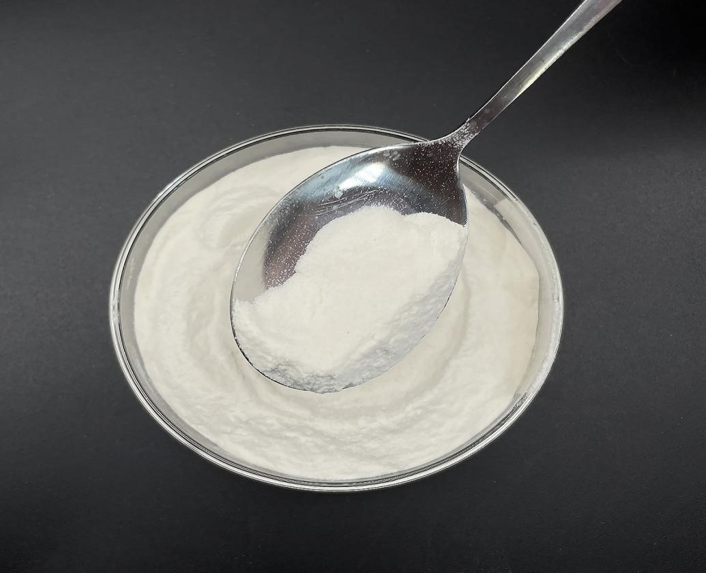
By increasing cohesion within the cementitious mixture, HPMC can reduce the tendency of fine particles and cement paste to disperse when exposed to flowing water. Research has also investigated interactions between HPMC-containing systems and hydration products such as calcium silicate hydrate (C-S-H), helping explain their potential contribution to underwater stability.
1.2 Limitations of Conventional HPMC
Despite its many advantages, HPMC is not without limitations. Its benefits in water retention and rheological control can sometimes be accompanied by undesirable effects on other properties, particularly mechanical strength and flowability.
1.2.1 Potential Reduction in Mechanical Strength
One of the principal concerns associated with conventional HPMC is its potential influence on the compressive and flexural strength of hardened mortar.
Various studies have reported reductions in mechanical performance when HPMC is incorporated into certain cementitious systems. The magnitude of the effect depends on factors such as dosage, HPMC grade, water-to-cement ratio, cement chemistry, curing conditions, and the overall formulation.
In 3D-printing mortar, for instance, excessive viscosity-modifying additive content may influence the final mechanical properties. Similarly, in aluminate cement-gypsum systems, HPMC can affect pore structure and hydration-product development, potentially reducing flexural, compressive, and tensile bond strength.
1.2.2 Why Can HPMC Reduce Strength?
Two important mechanisms are commonly associated with this phenomenon.
First, HPMC can promote air entrainment. The resulting microscopic air voids may increase the porosity of the hardened material and decrease its effective density. Higher porosity generally creates more pathways for stress concentration and can negatively affect mechanical strength.
Second, HPMC can influence the rate of cement hydration. Its water-retention and surface-interaction effects may alter the early hydration process, potentially slowing the development of early-age strength.
Therefore, achieving excellent workability and water retention with conventional HPMC can involve a compromise with strength if the formulation is not carefully optimized.
1.2.3 Possible Loss of Flowability
The thickening action of HPMC can also reduce mortar fluidity.
As viscosity increases, flowability generally decreases. This creates an important formulation challenge: the material must remain cohesive enough to prevent segregation and sagging while still being fluid enough for pumping, spreading, extrusion, or self-leveling.
At high water-to-cement ratios, the effectiveness of the polymeric network may also change because of dilution. Strong mechanical shear can further disturb the structure developed by HPMC, making rheological control more complex.
2. TRUNNANO Nano-Modification Technology: Addressing the Performance Trade-Off
2.1 Nano-Synergistic Modification and the Three-Part Compensation Mechanism
The fundamental challenge with conventional HPMC is balancing its desirable water-retention and rheological functions against possible reductions in density, hydration development, and mechanical strength.
TRUNNANO approaches this challenge through nano-modification. By incorporating suitable nanomaterials, such as amorphous nano-silica, into an HPMC-based system, an organic-inorganic composite structure can be developed.
This approach is designed around three complementary mechanisms.
2.1.1 Nano-Filling and Densification
Nanoparticles have extremely high specific surface areas and can interact with the microstructure of cementitious materials.
In an HPMC-containing system, nano-sized particles can help occupy fine voids and microstructural defects associated with air entrainment and gaps between cement particles. This filling effect can contribute to a denser hardened structure.
By reducing the volume and connectivity of undesirable pores, nano-modification can help compensate for some of the density loss associated with conventional HPMC.
2.1.2 Nucleation and Hydration Enhancement
Nanomaterials can also act as nucleation sites for cement hydration products.
For materials such as nano-silica, their high surface area can provide favorable locations for the development of hydration products, including C-S-H gel. This can encourage a more refined and interconnected cementitious microstructure.
The resulting additional or accelerated hydration products can help offset the slower early-strength development that may occur in some HPMC-containing formulations.
2.1.3 Strengthening of the Interfacial Zone
The interface between cement paste and aggregate is another important factor controlling concrete and mortar performance.
Nano-modification can help refine the interfacial transition zone (ITZ) by reducing microstructural defects and improving the continuity of the cementitious matrix. A stronger interface can contribute to improved load transfer throughout the hardened material.
Together, nano-filling, hydration promotion, and interfacial strengthening form a synergistic approach to reducing the traditional performance compromises associated with HPMC.
2.2 Performance Potential of Nano-Modified HPMC
The nano-modification concept has been explored in research and patented technologies involving combinations of HPMC and amorphous nano-silica, among other components.
Such formulations have been developed with the objective of combining water retention with improved dimensional stability and mechanical performance. Other research involving 3D-printed ultra-high-performance concrete has demonstrated that combinations of nano-clay and HPMC can produce very high compressive strengths in printed components under suitable formulation and curing conditions.
These findings illustrate the potential of combining polymeric additives with engineered nanomaterials rather than relying on HPMC alone.
Importantly, actual performance depends on the complete formulation, including cement type, particle size distribution, water-to-binder ratio, additive dosage, curing regime, and mixing procedure. Nano-modification should therefore be regarded as a formulation technology rather than a universal replacement for conventional HPMC.
2.3 Quality Control and Formulation Consistency
The performance of HPMC depends heavily on its chemical and physical characteristics. Factors such as viscosity, substitution degree, hydroxypropoxy content, reaction conditions, dissolution behavior, and raw-material quality can influence its performance in cement-based systems.
TRUNNANO focuses on controlling these variables through a quality-management approach extending from material selection and molecular design to product formulation and customization.
Such process control is important because consistent additive properties are essential for achieving predictable mortar and concrete performance from batch to batch.
Traditional HPMC vs. Nano-Modified HPMC
| Performance Area | Conventional HPMC | TRUNNANO Nano-Modified HPMC |
|---|---|---|
| Water Retention | Excellent | Excellent, with the water-retention function maintained |
| Compressive Strength | May decrease depending on formulation | Designed to compensate for strength loss |
| Density | Air entrainment may increase porosity | Nano-filling can help refine and densify the structure |
| Hydration | May influence or retard early hydration | Nano-nucleation can support hydration development |
| ITZ | Potential microstructural weaknesses | Designed to strengthen and refine the interface |
| Air-Void Structure | May produce additional air voids | Nano-particles can help refine the microstructure |
| Overall Performance | May require a balance between water retention and strength | Designed to achieve a better balance between workability, water retention, and strength |
3. Application Opportunities for Nano-Modified HPMC
3.1 High-Performance Concrete and Mortar
Nano-modified HPMC can be considered for high-performance cementitious materials where water retention, workability, cohesion, and mechanical strength must be simultaneously controlled.
The objective is to preserve the handling benefits of HPMC while minimizing the negative effects that excessive polymer content may have on hardened performance.
3.2 3D-Printed Construction Materials
3D printing places demanding requirements on cementitious materials. The mixture must be fluid enough to pass through the printing system but cohesive enough to retain its shape after extrusion.
At the same time, printed layers must develop sufficient strength to support subsequent layers and eventually achieve the required final mechanical performance.
A carefully engineered combination of HPMC and nanomaterials can help balance these requirements by controlling rheology while supporting microstructural development.
3.3 Underwater Non-Dispersible Concrete
Underwater construction requires cementitious mixtures with strong cohesion and resistance to washout.
HPMC can provide valuable anti-dispersion characteristics, while nano-modification offers a potential route toward improving the density and mechanical properties of the hardened material.
This combination may be useful in applications where both underwater stability and post-curing strength are critical.
3.4 Specialty Mortars
Specialized products such as self-leveling compounds, repair mortars, grouts, and other high-performance formulations require precise control over flow, adhesion, water retention, setting behavior, and strength.
Nano-modified HPMC provides a potential strategy for reducing the traditional conflict between high viscosity and fluidity or between water retention and mechanical performance.
4. About TRUNNANO
TRUNNANO, also known as Luoyang Tongrun Info Technology Co., Ltd., was established in 2014 and focuses on nano-modified materials and advanced concrete admixture technologies.
The company has developed expertise in nano-modified HPMC systems designed to combine the advantages of organic polymer additives with the microstructural benefits of inorganic nanomaterials.
Its product and formulation capabilities target applications including high-performance mortar, underwater non-dispersible concrete, self-leveling materials, repair mortar, and grouting systems. Customized formulation services are also available for specific application requirements.
With an emphasis on quality management and formulation consistency, TRUNNANO aims to provide reliable nano-modified materials for customers in international markets.
The development of nano-modified HPMC represents a broader shift in cementitious-material technology: instead of accepting a simple trade-off between water retention and strength, advanced organic-inorganic systems seek to optimize both properties within the same formulation.